




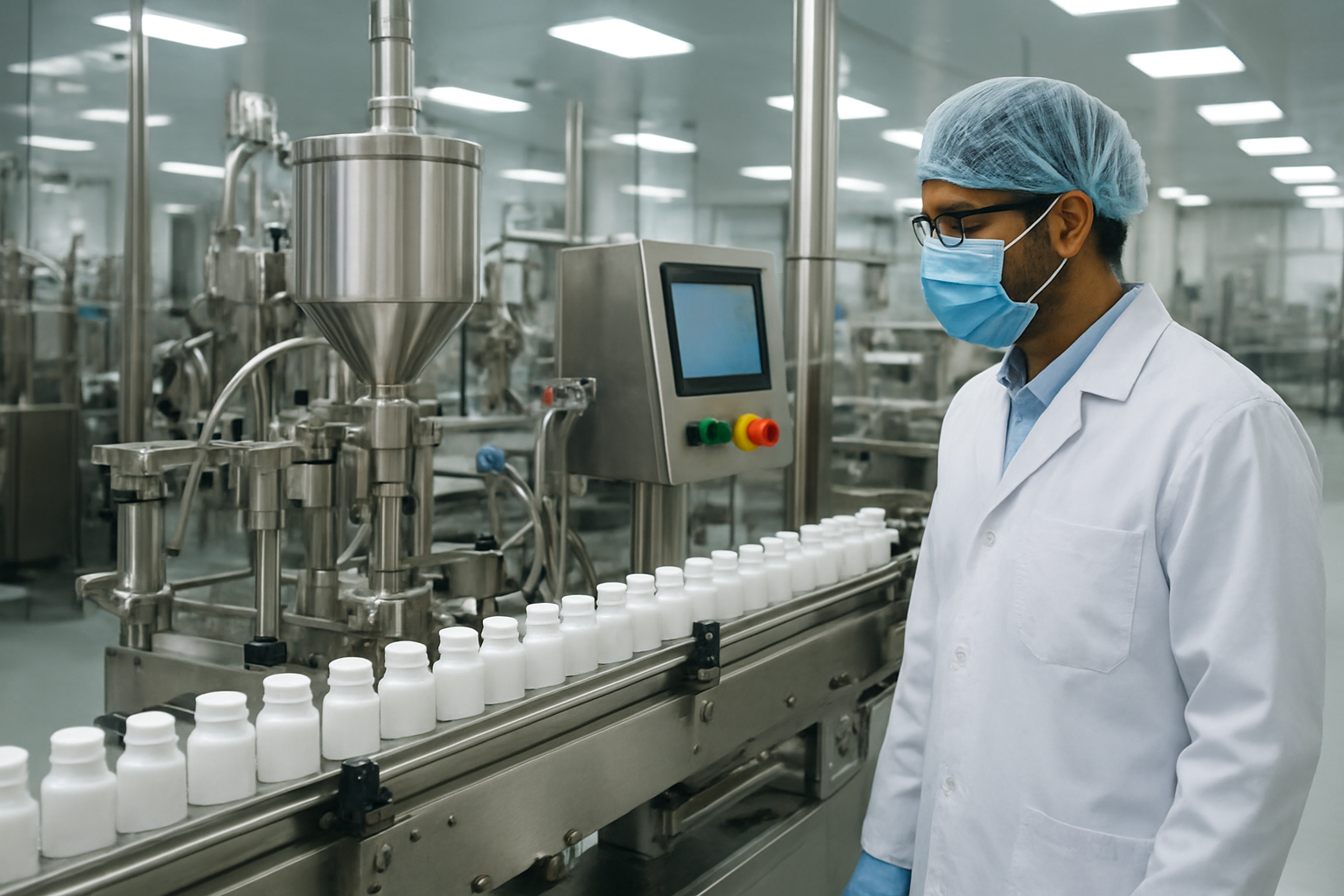
South Asia produces a very large share of the world’s generic medicine. India is the largest supplier of generics globally. Bangladesh meets 98 percent of its own demand and exports to more than 160 countries. Pakistan and Sri Lanka have substantial domestic industries. Together the region is one of the few places where affordable medicine at scale is actually made.
The next few years will reshape how that happens. Eight trends matter most.
1. The Patent Transition Arrives
The most consequential change is legal rather than technical.
Bangladesh is scheduled to graduate from least developed country status on 24 November 2026, forfeiting the WTO TRIPS pharmaceutical waiver that has allowed local manufacture of patented molecules without licences. The waiver runs to end-2033, but only for countries that remain LDCs — graduation, not the calendar, ends it. Bangladesh has requested a three-year deferment to 2029, and a separate post-graduation transition extension can be sought at the WTO citing the public health precedent granted to the Maldives.
Nepal and Lao PDR face comparable transitions. India has operated under full TRIPS compliance since 2005 and offers the regional template for what follows: a shift toward strict patentability criteria, compulsory licensing provisions used sparingly but held in reserve, and an industry that adapts by moving up the complexity curve rather than by finding loopholes.
Practical effect: the exposed segment is roughly one-fifth of the Bangladeshi pipeline, concentrated in newer high-value molecules. Established generics continue unaffected. Manufacturers who have mapped their portfolio’s patent exposure product by product are in a very different position from those who have not.
2. API Localisation Becomes Strategic Rather Than Aspirational
Bangladesh imports 80 to 90 percent of its active pharmaceutical ingredients, mostly from India and China. Pakistan and Sri Lanka carry similar dependencies. Even India, the region’s chemistry powerhouse, imports a significant share of key starting materials from China.
The vulnerability is now well understood, and the responses are underway. Bangladesh’s API Industrial Park at Gazaria in Munshiganj, developed by BSCIC on 200 acres with a common effluent treatment plant, is the flagship project. Progress has been slow — the scheme began in 2008 and remains not fully operational, with irregular gas supply the binding constraint. Several manufacturers have nonetheless established facilities and begun commissioning.
India has pursued production-linked incentive schemes for bulk drugs and dedicated pharma parks with similar objectives.
What to watch: whether utility infrastructure catches up. API manufacturing is energy- and effluent-intensive. Without reliable power, gas and treatment capacity, industrial policy on paper does not become production.
3. Contract Manufacturing and CDMO Work Grows Fast
Global pharmaceutical companies have spent several years diversifying manufacturing away from single-country concentration. South Asia is the obvious beneficiary: established capacity, regulatory track record, cost advantage, English-language technical workforce.
For manufacturers in the region, contract development and manufacturing has a specific attraction in the post-graduation environment. It monetises capacity and quality systems without the manufacturer carrying patent exposure on the molecule. Contract manufacturing is consistently among the strategies recommended for Bangladesh’s post-LDC period, and encouraging it has been an explicit policy suggestion.
Requirement: CDMO clients audit hard. They want data integrity, validated processes, complete batch records, and a quality unit with genuine authority. This work is only available to manufacturers whose systems survive scrutiny.
4. Biosimilars and Complex Generics Become the Growth Frontier
Simple oral solids are a commodity with thin margins and many competitors. The value is moving toward products that are harder to make: biosimilars, injectables, modified-release formulations, inhalation products, ophthalmics, transdermals.
India has established biosimilar capability. Bangladesh has begun — biosimilars appear among the registration applications pending with the DGDA, and vaccine production exists at Incepta, Popular and Healthcare.
Constraint: the regulatory infrastructure has to keep up. The DGDA has been urged to modernise so it can efficiently register and approve complex, jointly developed therapeutics, which is bound up with its work toward WHO Maturity Level 3 classification. Without ML-3, vaccine exports remain largely blocked from global procurement channels regardless of manufacturing capability.
5. Quality Expectations Ratchet Up, Permanently
Regulatory expectations across the region are converging upward, and the direction is one-way.
Bangladesh’s Drugs and Cosmetics Act 2023 replaced legislation from 1940 and 1982, wrote WHO GMP compliance into statute, brought cosmetics and medical devices under DGDA authority, provided for penalties up to life imprisonment for contaminated products, and empowered a dedicated Department of Drug Prosecution.
Across the region, data integrity has become the dominant audit theme. Foreign inspectors now scrutinise audit trails, access controls, whether records were created contemporaneously, and whether electronic systems permit undetected alteration. Findings in this area have ended export access for facilities that were technically capable but documentarily weak.
Implication: the gap between manufacturers with genuine quality systems and those with certificates is becoming commercially visible. Buyers audit, and audits find culture, not paperwork.
6. Digital Manufacturing Moves From Pilot to Practice
The technology story in South Asian pharma manufacturing is less about robots and more about records.
Electronic batch records replacing paper, removing transcription errors and making review faster and audit trails automatic.
Process analytical technology measuring critical parameters in real time during production instead of sampling afterwards, so deviations are caught while they can still be corrected.
Serialisation and track-and-trace, driven by export market requirements and by the falsified medicine problem. Unit-level identifiers make counterfeit detection and targeted recall dramatically more effective.
Predictive maintenance on production equipment, reducing unplanned downtime that causes batch loss.
Laboratory information management systems connecting testing data directly to release decisions.
Adoption is uneven. Large exporters are well advanced; mid-sized domestic manufacturers are earlier. The forcing function is export market requirements rather than internal efficiency arguments.
7. Environmental Compliance Becomes a Market Access Issue
Pharmaceutical manufacturing generates solvent waste, effluent containing active ingredients, and significant energy demand. API synthesis is considerably worse than formulation on all three counts.
Two pressures are converging. Domestic environmental regulation is tightening — the API park’s common effluent treatment plant reflects recognition that ingredient manufacturing cannot proceed without it. And European buyers increasingly assess supplier environmental performance as part of procurement, with antibiotic effluent discharge a particular focus given its link to environmental antimicrobial resistance.
Consequence: environmental performance is shifting from a compliance cost to a market access condition. Manufacturers treating it as the former will find it becomes the latter without warning.
8. Regional Trade and Regulatory Harmonisation, Slowly
Intra-South Asian pharmaceutical trade remains modest relative to the region’s production capacity, held back by divergent registration requirements, testing duplication and non-tariff barriers.
Progress is incremental: reliance on WHO certification schemes, gradual alignment on Common Technical Document dossier formats, mutual recognition discussions. Nothing resembling the EU’s centralised procedure is imminent.
Where the near-term opportunity is: manufacturers positioning for regional supply rather than only for distant export markets, particularly as tariff preferences erode and freight-adjacent markets become relatively more attractive.
What This Means for a Manufacturer in Bangladesh
Reading the eight trends together, the strategic picture is reasonably clear.
The commodity generic business gets harder. More competitors, thinner margins, tariff exposure after preference loss, and cost pressure from imported inputs.
The quality-differentiated business gets easier. CDMO clients, regulated market registrations and institutional buyers are all selecting on documentation depth, and there are fewer suppliers who genuinely qualify than the certificate count suggests.
Vertical capability compounds. Own production rather than outsourcing, own quality laboratory, own formulation development. Each removes a dependency and adds an answer you can give a buyer directly.
Breadth across categories hedges the transition. Manufacturers operating across pharmaceuticals, toiletries, cosmetics and food and beverage under one quality system are less exposed to any single regulatory shift, and the underlying discipline transfers between categories.
Preparation beats prediction. Whether graduation lands in November 2026 or is deferred to 2029, the work required is identical: patent mapping, supplier diversification, quality system depth, documentation that survives an audit.
Frequently Asked Questions
Is South Asia still the centre of generic medicine production?
Yes. India is the world’s largest generic supplier and Bangladesh exports to more than 160 countries. The region’s role is growing, though the product mix is shifting toward more complex products.
What is the single biggest risk to the sector in 2026?
Continued dependence on imported active pharmaceutical ingredients, which exposes manufacturers to price volatility, export restrictions and supply shocks regardless of how good their formulation capability is.
How does LDC graduation affect manufacturers outside Bangladesh?
Nepal and Lao PDR face similar transitions. Indian and other regional manufacturers may see opportunity in licensing arrangements and contract supply as Bangladeshi firms adjust.
What is a CDMO?
A contract development and manufacturing organisation — a company that develops and manufactures products on behalf of another firm, which then markets them.
Will these trends make medicine more expensive?
Patent obligations and compliance investment push costs up for newer molecules. Competition, scale and eventual API localisation push them down for established generics. The net effect differs sharply by product category.
Closing
Pharma manufacturing in South Asia is moving from a cost-advantage model toward a capability model. Patent obligations, ingredient localisation, complex products, data integrity, digital records and environmental performance are all pushing in the same direction: the manufacturers who invested in real systems will have more options in 2029 than they had in 2019, and those who did not will have fewer.
PROMIXCO Pharmaceutical Limited manufactures medicines, toiletries, cosmetics and food and beverage products from its own production unit in Dhaka, under a single quality system with batch traceability from raw material to dispatch. A member of the Bangladesh Association of Pharmaceutical Industries.
For partnership, private label, OEM or contract manufacturing discussions: info@promixcopl.com.
